

Australian Opal vs Ethiopian Welo Opal: What's the Difference and Which Should You Buy?
If you've been shopping for opal jewellery online, you've almost certainly seen both Australian and Ethiopian opal — often at very different price points, sometimes described in very similar terms. The differences between them matter enormously, and understanding them will make you a much more confident buyer.
What is Australian opal?
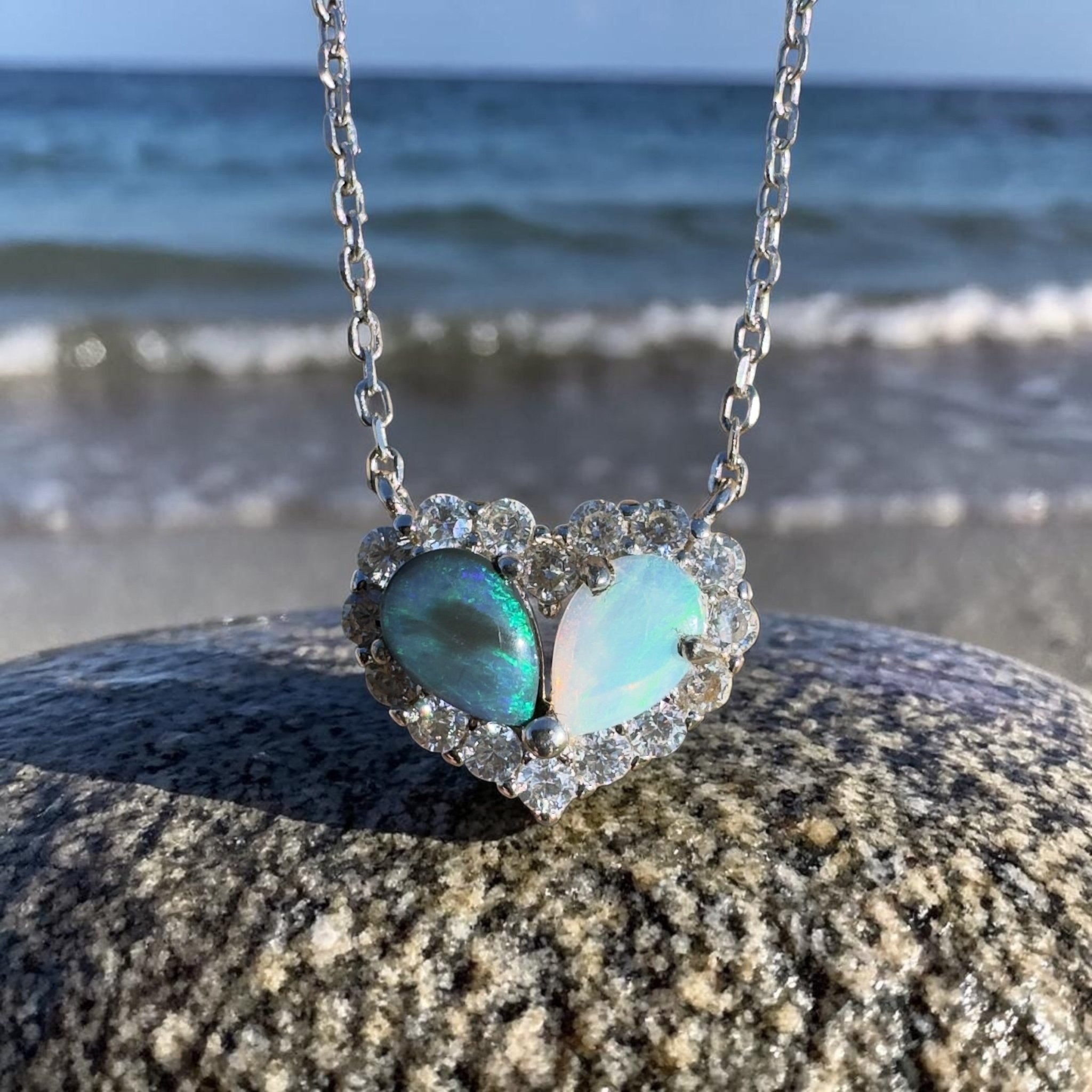
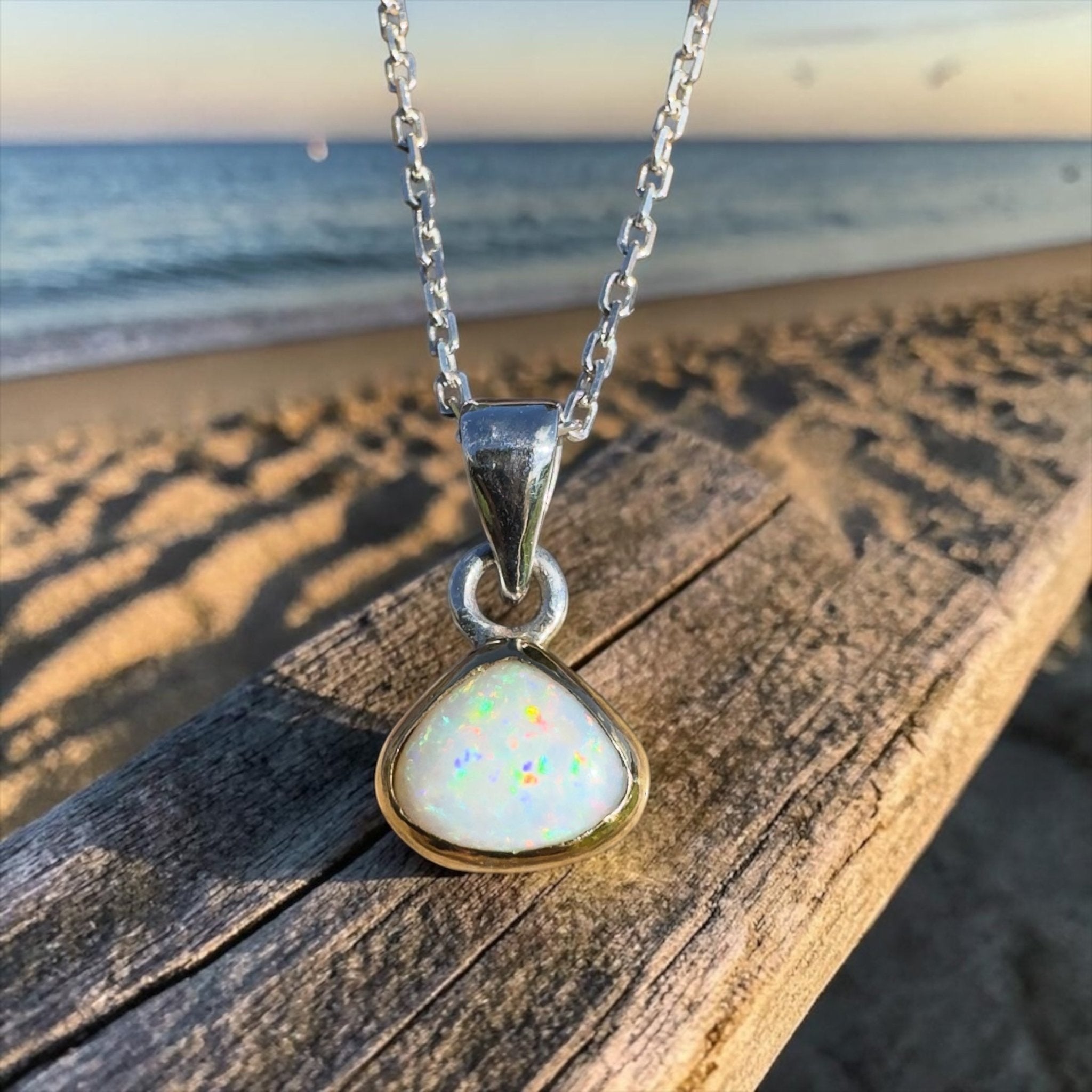
Australian opal is a naturally formed gemstone mined in Australia, which produces more than 95% of the world's precious opal. It forms in ancient sedimentary rock and is valued for its stability, durability, and extraordinary colour play. The main mining regions are Lightning Ridge in New South Wales (famous for black opal), Coober Pedy in South Australia (famous for white opal), and Queensland (famous for boulder opal). At Iona Opal Australia, every stone in the collection is solid Australian opal, hand-cut in Townsville.
What is Ethiopian opal?
Ethiopian opal — also called Welo opal after the region where most of it is found — is a newer arrival to the gem market, becoming widely available from around 2008. It produces vivid colour play and is generally less expensive than Australian opal of similar appearance. However, it has one significant characteristic that distinguishes it from Australian opal: it is hydrophane.
What does hydrophane mean and why does it matter?
Hydrophane means the stone absorbs water. When Ethiopian opal gets wet — in the shower, in a pool, even from humidity — it absorbs moisture, which can temporarily or permanently alter its colour play. In some cases the colour disappears entirely while the stone is wet and returns when it dries. Over time, repeated wetting and drying can cause the stone to craze — developing fine internal cracks that permanently damage its appearance.
Australian opal does not do this. It formed in stable ancient rock over millions of years and does not absorb water. You can wash your hands wearing solid Australian opal without concern.
Which is more durable for jewellery?
Solid Australian opal is significantly more durable for jewellery intended to be worn regularly. For rings, bracelets, and any piece that will be worn daily or exposed to water, solid Australian opal is the correct choice. Ethiopian opal is better suited to collectors' pieces kept in controlled conditions, or jewellery worn occasionally and carefully.
Is Australian opal more expensive than Ethiopian opal?
Yes, generally. Australian opal commands a higher price because of its superior durability, its finite supply, and the quality of its colour play — particularly in fine black opal from Lightning Ridge. Ethiopian opal can appear to offer similar colour at a lower price, but the long-term value is not comparable when durability is factored in.
Which should you buy?
If you're buying opal jewellery to wear and keep — for yourself, as a gift, or as something to pass down — solid Australian opal is the right choice every time. At Iona Opal Australia, I only work with solid Australian opal for exactly this reason. I want every piece I make to still be beautiful in twenty years.
Shop solid Australian opal jewellery at Iona Opal Australia →

Leave a comment
This site is protected by hCaptcha and the hCaptcha Privacy Policy and Terms of Service apply.