
How to Tell Real Opal from Fake: A Buyer's Guide
The opal market has never been more crowded — or more confusing. Walk into any jewellery store or scroll through an online marketplace and you'll find "opals" at every price point, in every colour, claiming every origin. The problem? Many of them aren't real opals at all.
As someone who cuts and sets solid Australian opals by hand every day, I want to help you shop with confidence. Here's what to look for — and what to watch out for.
What counts as a "real" opal?
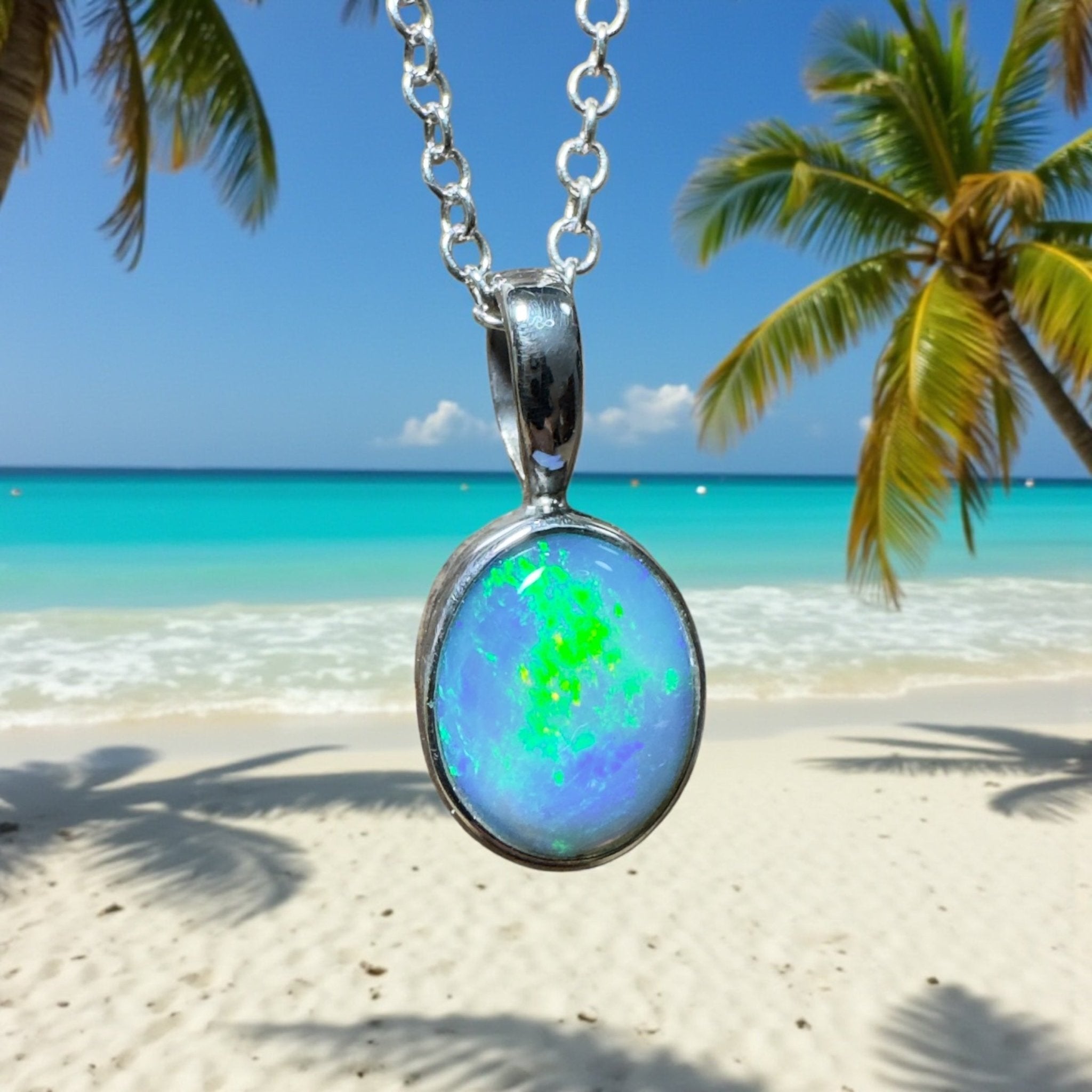
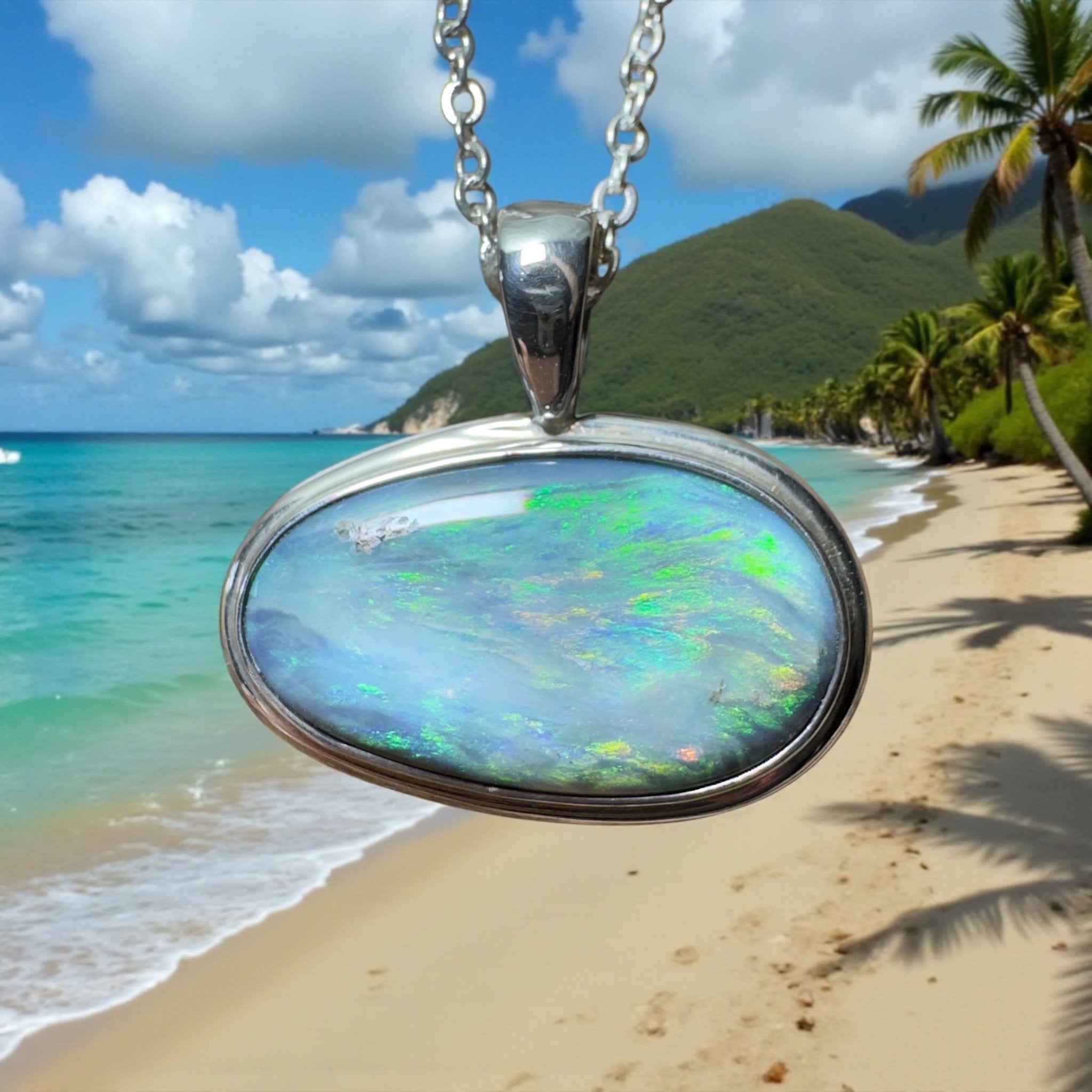
A real opal is a naturally formed gemstone — silica that has settled over millions of years into the precise internal structure that creates colour play. It is mined, cut, and polished. Nothing is added, layered, or manufactured.
The term you want to see is solid opal. That means the entire stone is natural opal, with nothing artificial backing or coating it.
Doublets and triplets — not fake, but not solid
Doublets and triplets are not synthetic, but they're not solid opals either. A doublet is a thin slice of opal glued to a dark backing to enhance colour. A triplet adds a clear dome on top. Both are far less durable than solid stones and should be priced accordingly.
If a seller doesn't clearly state which type you're buying, that's a red flag.
Synthetic and simulated opals
Synthetic opals are lab-created. They mimic the look of real opal using manufactured silica, but lack the depth, pattern complexity, and uniqueness of a natural stone. Simulated opals go further — they're often glass or plastic with colour added. These aren't opals in any meaningful sense.
Under magnification, synthetics often show a lizard-skin or column-like pattern that natural opal never produces. The colour play in real opal is irregular, layered, and endlessly varied. In a synthetic, it tends to look almost too even.
Signs you're buying solid Australian opal
- The seller clearly states solid Australian opal, not just "opal"
- The origin is named — Lightning Ridge, Coober Pedy, Queensland boulder fields
- The stone is set in solid gold or sterling silver, not base metal
- The maker is identifiable — not a factory, but a person
- A Certificate of Authenticity is available on request
At Iona Opal Australia, every piece I make is solid opal — hand-cut in my Townsville workshop, with full transparency about origin and type. If you're ever unsure about a piece you've seen elsewhere, feel free to reach out. I'm always happy to help you read a stone.
Browse solid Australian opal jewellery at Iona Opal Australia →

Leave a comment
This site is protected by hCaptcha and the hCaptcha Privacy Policy and Terms of Service apply.