
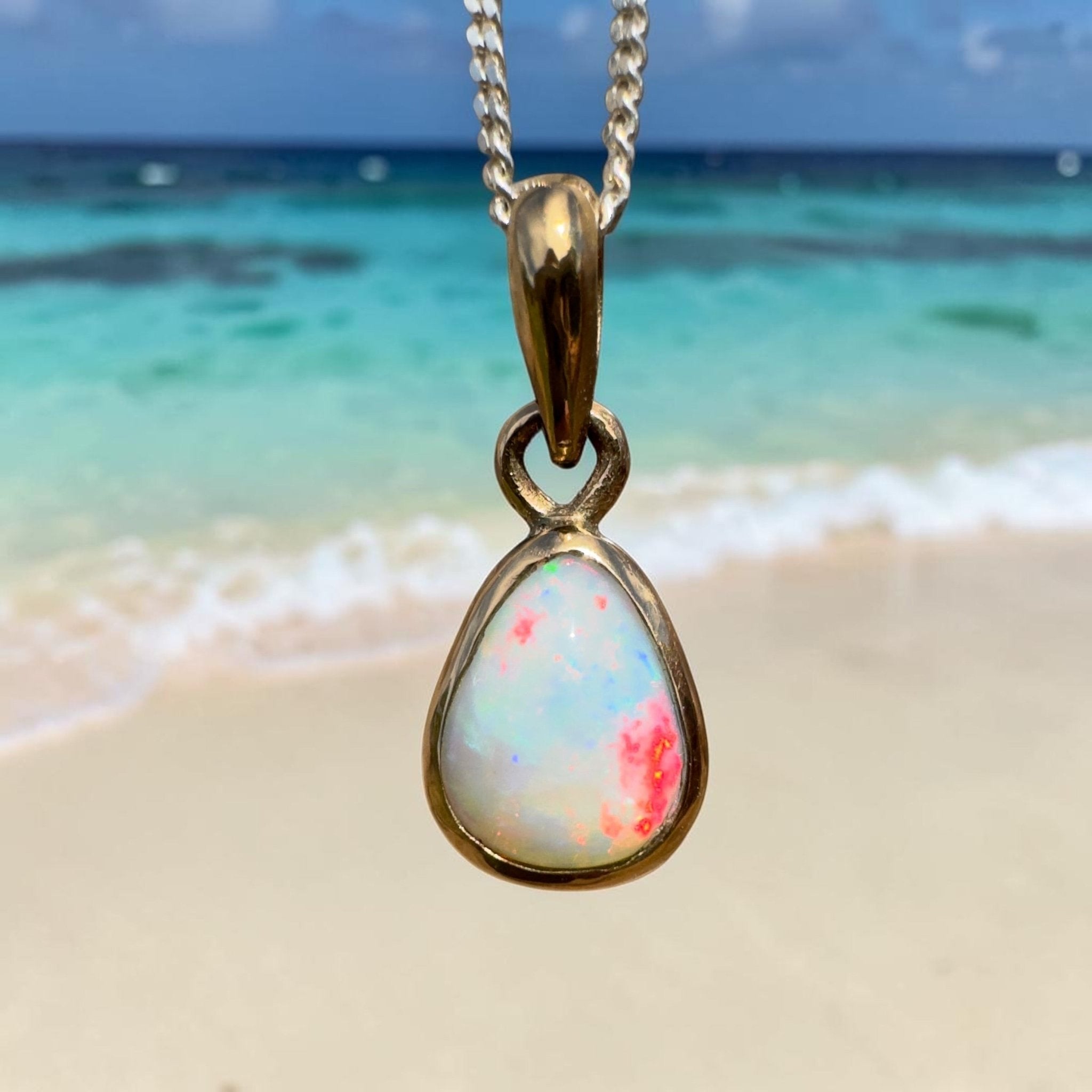
Can You Wear Opal in the Shower? Everything You Need to Know About Opal and Water
"Can I wear my opal in the shower?" is one of the most common questions I get, and the answer is not simply yes or no — it depends on what kind of opal you have. Here's the full picture.
Can you wear solid Australian opal in the shower?
Solid Australian opal is not hydrophane — it does not absorb water — so brief exposure to water will not damage the stone itself. However, there are still good reasons to remove your opal jewellery before showering. Soap, shampoo, and conditioner can leave a residue on the stone that dulls its surface over time. And the simple act of removing and replacing jewellery in the shower creates unnecessary risk of dropping and chipping the stone.
The safest habit is to remove opal jewellery before showering. It takes five seconds and removes all risk.
Can you wear Ethiopian opal in the shower?
No. Ethiopian opal — also called Welo opal — is hydrophane, meaning it absorbs water. When it gets wet, the water enters the stone's internal structure, which can temporarily suppress the colour play or permanently damage the stone through crazing — fine internal cracks that develop as the stone repeatedly swells and contracts with moisture. Ethiopian opal should never be worn in the shower, swimming, or in humid conditions.
This is one of the most important reasons to understand which type of opal you own. If you've ever seen an opal go cloudy in the shower, it was almost certainly Ethiopian opal. Iona Opal Australia works with solid Australian opal only, no doublets, triplets or imported opal.
Can you wear opal swimming?
Swimming in your jewellery isn't really recommended for any type of opal. Pool water contains chlorine, which can damage metal settings and affect the surface of stones over time. Saltwater is similarly damaging to metals and sand can be abrasive to opals. And the risk of losing a ring or pendant in the water is real. Remove all fine jewellery before swimming, regardless of the stone type.
What about washing your hands?
Brief hand washing with mild soap is generally fine for solid Australian opal in a secure setting. Rinse it off quickly and pat dry. Avoid soaking the stone, and avoid hand sanitisers with high alcohol content, which can dry out the stone's surface over time.
What should you do if your opal gets wet?
If your solid Australian opal gets wet, simply pat it dry with a soft cloth and allow it to air dry fully before storing it. Do not use heat to dry it — hair dryers and direct sunlight can cause stress to the stone. For Ethiopian opal that has become cloudy after water exposure, allow it to dry slowly in open air — the colour may return as it dries, but repeated wetting will eventually cause permanent damage to Welo therefore we recommend choosing solid Australian opal only.
The simple rule
Solid Australian opal from Iona Opal Australia is durable and built for everyday wear — but taking it off for showers, swimming, and cleaning is a simple habit that will keep it looking beautiful for decades. When in doubt, take it off.
Shop solid Australian opal jewellery at Iona Opal Australia →

Leave a comment
This site is protected by hCaptcha and the hCaptcha Privacy Policy and Terms of Service apply.