
How Australian Opal Forms: The 100-Million-Year Story
Australian opal is one of the most extraordinary gemstones on earth — and unlike almost every other precious stone, it didn't form from heat and pressure. It formed from water, time, and the slow chemistry of ancient seas. Understanding how it happens makes holding one feel even more remarkable.
It Begins with an Inland Sea
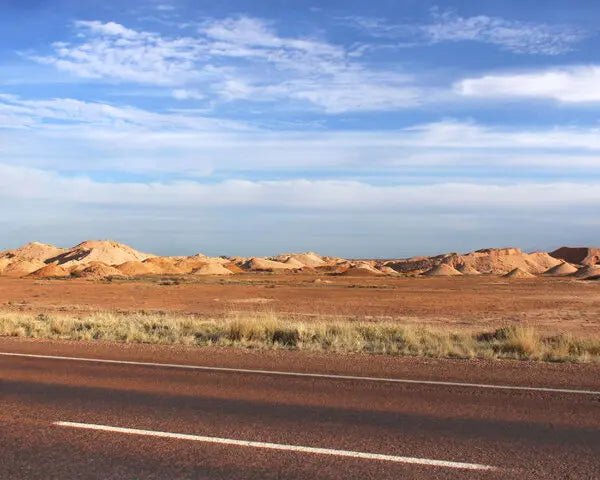
Around 100 million years ago, much of inland Australia was covered by a vast shallow sea. When that sea retreated, it left behind thick sequences of sedimentary rock — sandstone, mudstone, and claystone — rich in silica. That silica is the raw material that would eventually become opal.
Water Does the Work
Over millions of years, rainwater seeped down through the weathered rock, dissolving the silica as it went. This silica-rich water — essentially a very dilute gel — found its way into any available space: cracks in rock, voids left by decaying organic material, even the spaces inside fossilised shells and bones. That's why opalised fossils exist. The water simply filled whatever was there.
The Spheres That Create Colour
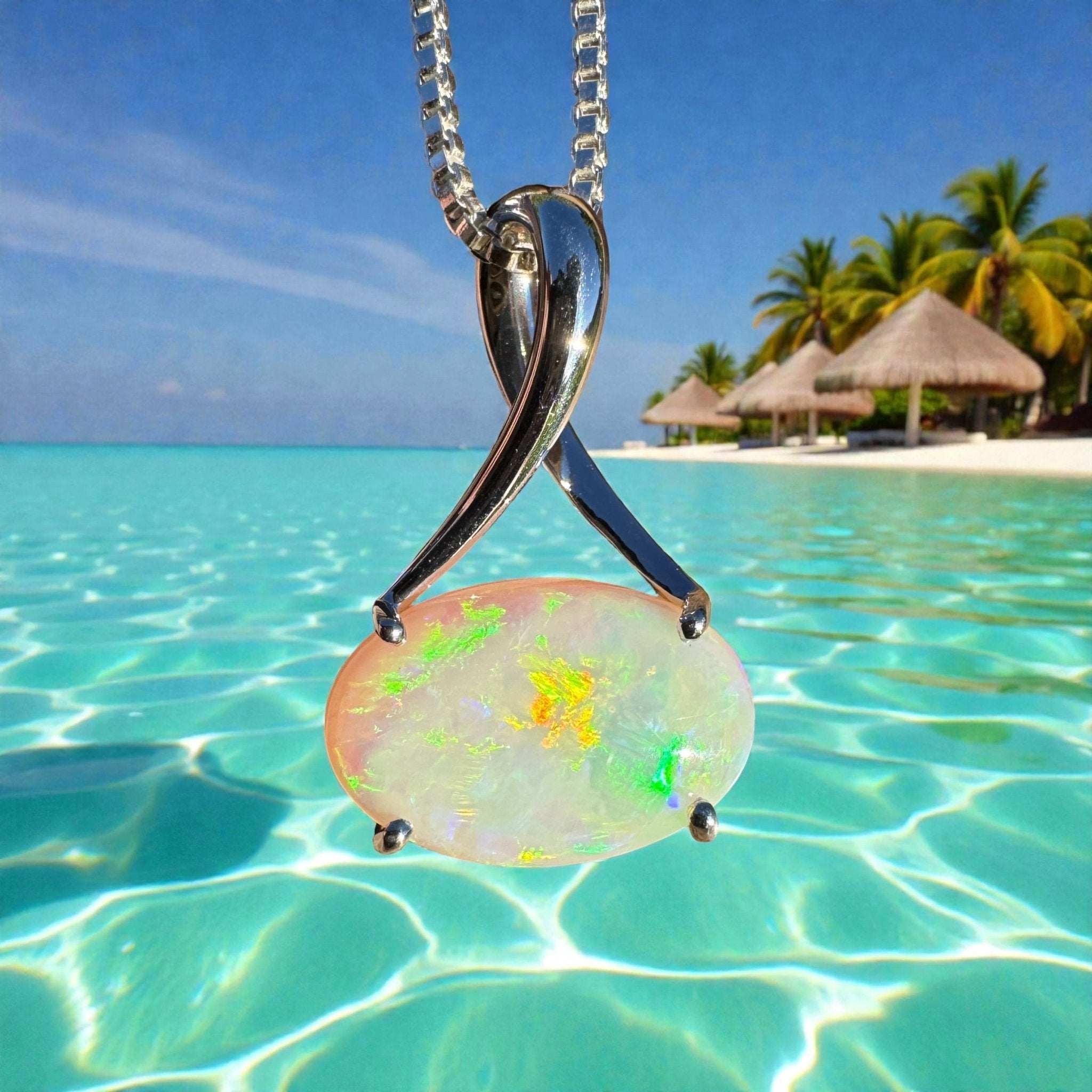
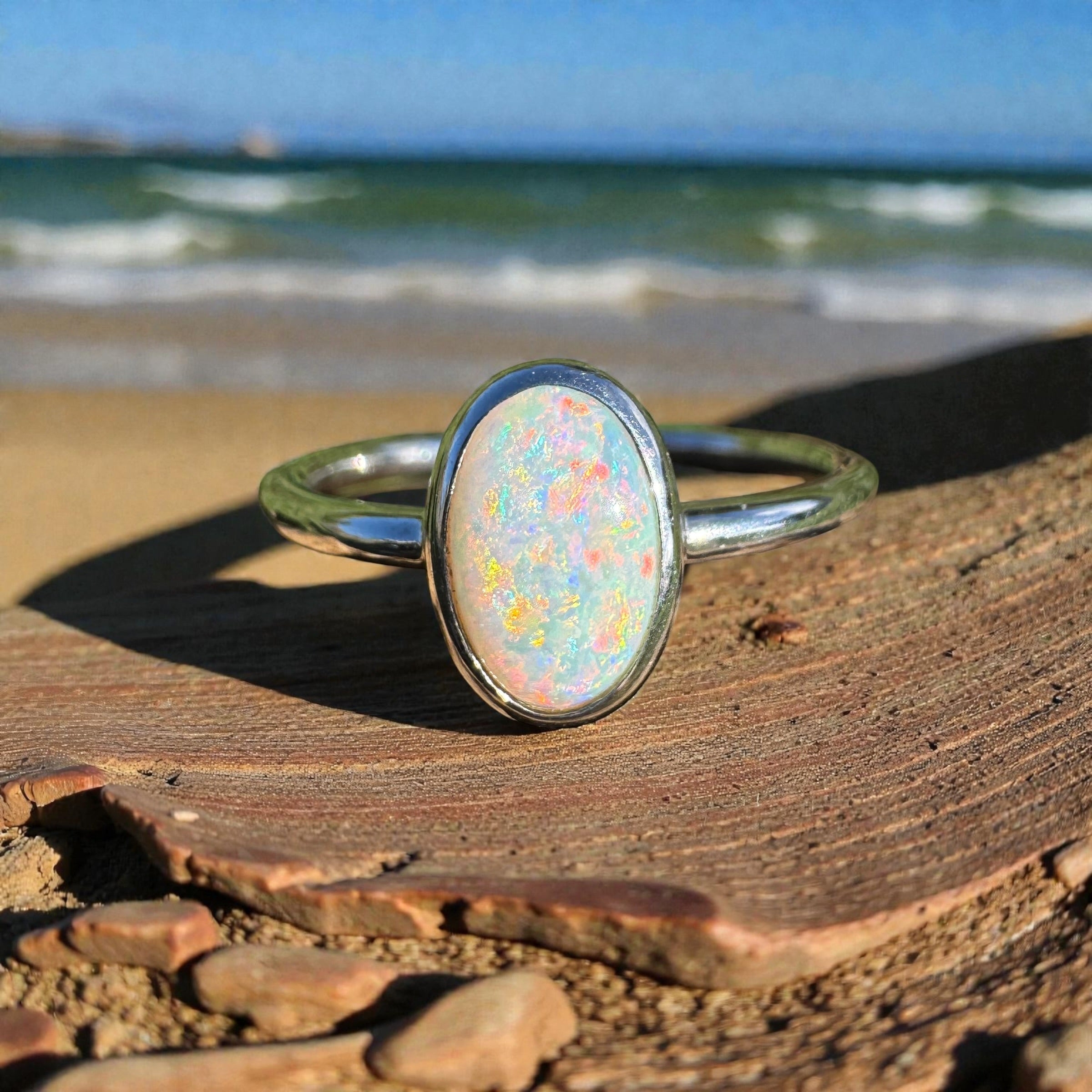
As the water slowly evaporated over an extraordinarily long period, it left behind tiny spheres of amorphous silica, stacked in layers. When those spheres are uniform in size and regularly arranged, something remarkable happens: light diffracts through the lattice and splits into colour. This is the play of colour — the fire — that makes opal unique among gemstones. No other stone produces colour this way. It's not pigment or reflection. It's pure physics.
Why Australian Opal is Different
Australia's specific geology — that ancient sea bed, the particular silica content of the rock, and millions of years of the right conditions — produced opal of a quality found almost nowhere else on earth. The main fields are in South Australia (Coober Pedy and Andamooka), New South Wales (Lightning Ridge and White Cliffs), and Queensland (the boulder opal country). Each region produces stone with its own character, because each has its own geological story.
From Formation to Finished Stone
Once opal is mined, it's cut and shaped by hand — a skill that takes years to develop. The cutter's job is to find and reveal the colour, working with the natural contours of the stone rather than against them. A good cut maximises the fire. A poor one buries it. At Iona Opal Australia, every stone is cut in-house, which means the journey from rough to finished piece stays in the same hands throughout.
See the finished result — browse solid Australian opals at Iona Opal Australia →


Leave a comment
This site is protected by hCaptcha and the hCaptcha Privacy Policy and Terms of Service apply.