
Article: Inclusions, Sand and Lines — Which Natural Flaws in Opal Actually Matter
Inclusions, Sand and Lines — Which Natural Flaws in Opal Actually Matter
Opal is a natural material, formed over millions of years in the cracks and cavities of ancient rock. That means almost every genuine stone carries some sign of how it came to be. Part of learning to buy opal well is understanding which of those signs are simply character, and which ones actually matter for how a stone will wear and what it's worth.
Sand and potch inclusions
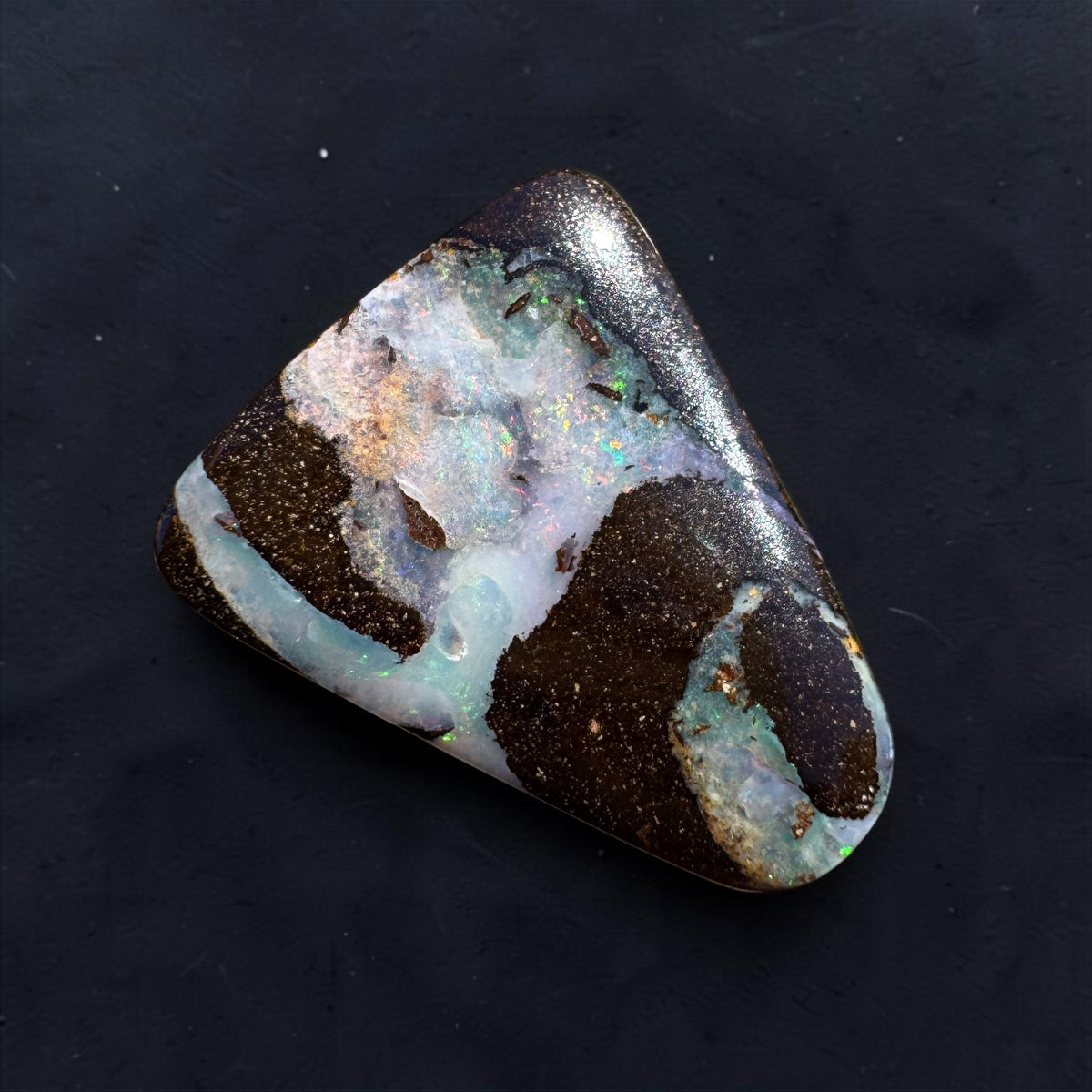
Many opals include patches of sand or potch, the colourless opal that forms alongside the precious material. In a boulder or matrix stone this is completely normal and often part of the appeal, since the ironstone or host rock is what gives those opals their character. In a stone sold as clean crystal or light opal, however, visible sand can interrupt the colour and lower the value.
Whether it matters comes down to what the stone is meant to be. Sand in a boulder opal is honest and expected. Sand hidden in a stone priced as flawless crystal is a different conversation.
Lines, cracks and crazing
This is the distinction that matters most for durability, and it's worth understanding clearly:
- Growth lines are natural boundaries within the stone. They're usually harmless and don't affect how the opal wears.
- Cracks break the surface and can weaken a stone. A genuine crack is a real fault and should always be disclosed and reflected in the price.
- Crazing is a fine network of surface cracks, sometimes caused by a stone drying out too quickly. It's the one flaw I take most seriously, because it can worsen over time.
A reputable seller will tell you the difference and never pass a crack off as a harmless line. If someone won't let you see a stone clearly or brushes off your questions, that tells you something in itself.
Inclusions that add rather than subtract
Not every mark is a flaw. Some inclusions make a stone more interesting and more individual. A fossil trace, an unusual pattern boundary, or the ironstone backing of a boulder opal can all add to the story and the beauty of a piece. Part of the pleasure of solid Australian opal is that no two stones are ever the same, and their natural features are a large part of why.
How to look at a stone honestly
When you're considering an opal, ask to see it under good light and from several angles. Tilt it, look at the back as well as the face, and don't be shy about asking what any mark is. A genuine specialist will be glad to explain, because honest answers build trust and there's nothing to hide in a good stone.
At Iona Opal Australia
I cut every stone myself, so I know each one's natural features intimately. When I describe an opal, I tell you what's there, sand, lines, character and all, because you deserve to know exactly what you're buying. A natural flaw disclosed honestly is far better than a perfect-sounding stone with a surprise waiting inside.


Leave a comment
This site is protected by hCaptcha and the hCaptcha Privacy Policy and Terms of Service apply.