
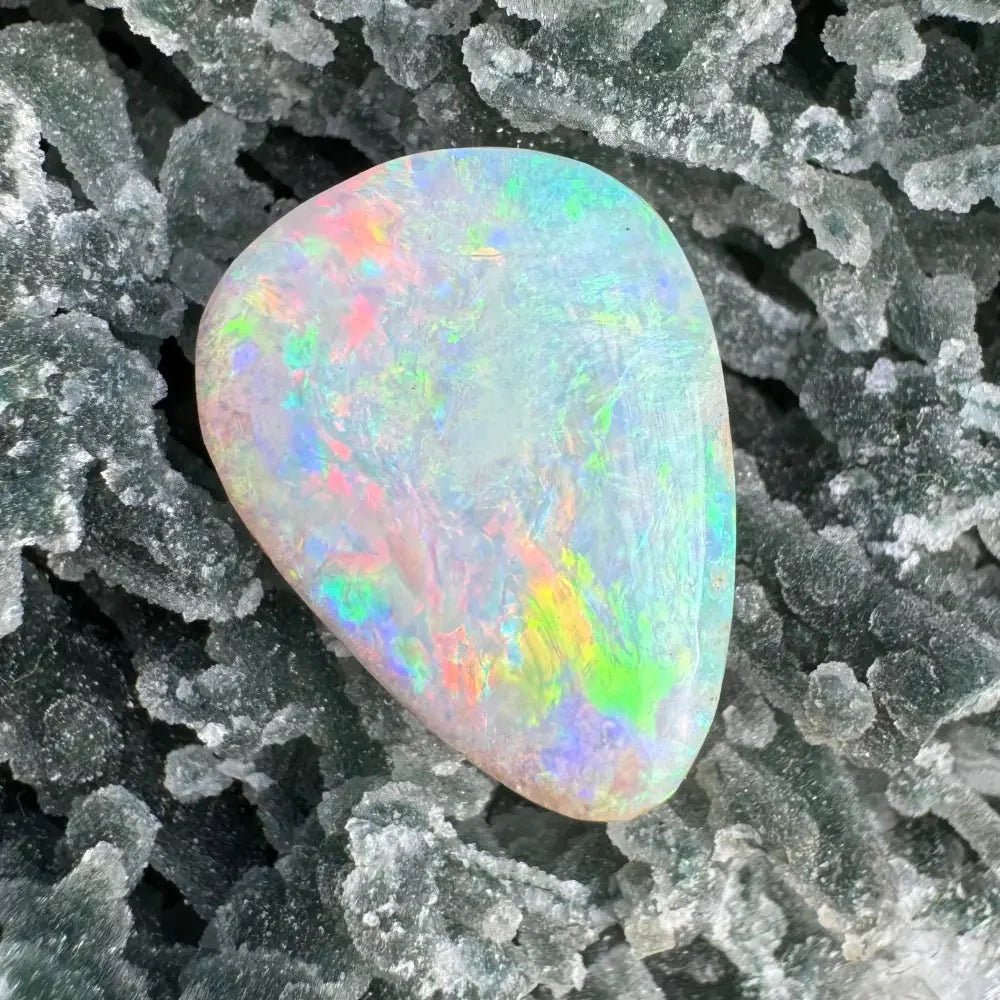
The Science Behind the Sparkle – What Gives Opals Their Colour?
Opals are famous for their dazzling play of colour, but few know the science behind this mesmerising effect. Understanding what gives opals their magic can deepen your appreciation for every piece you own.
The Secret of Silica Spheres
Opals are formed from tiny silica spheres that pack together in a unique, natural pattern. When light enters the stone, it bends and splits, creating the rainbow-like flashes known as “play-of-colour.” The size and arrangement of these spheres determine the colours you see—reds, blues, greens, and everything in between.
Why No Two Opals Are Alike
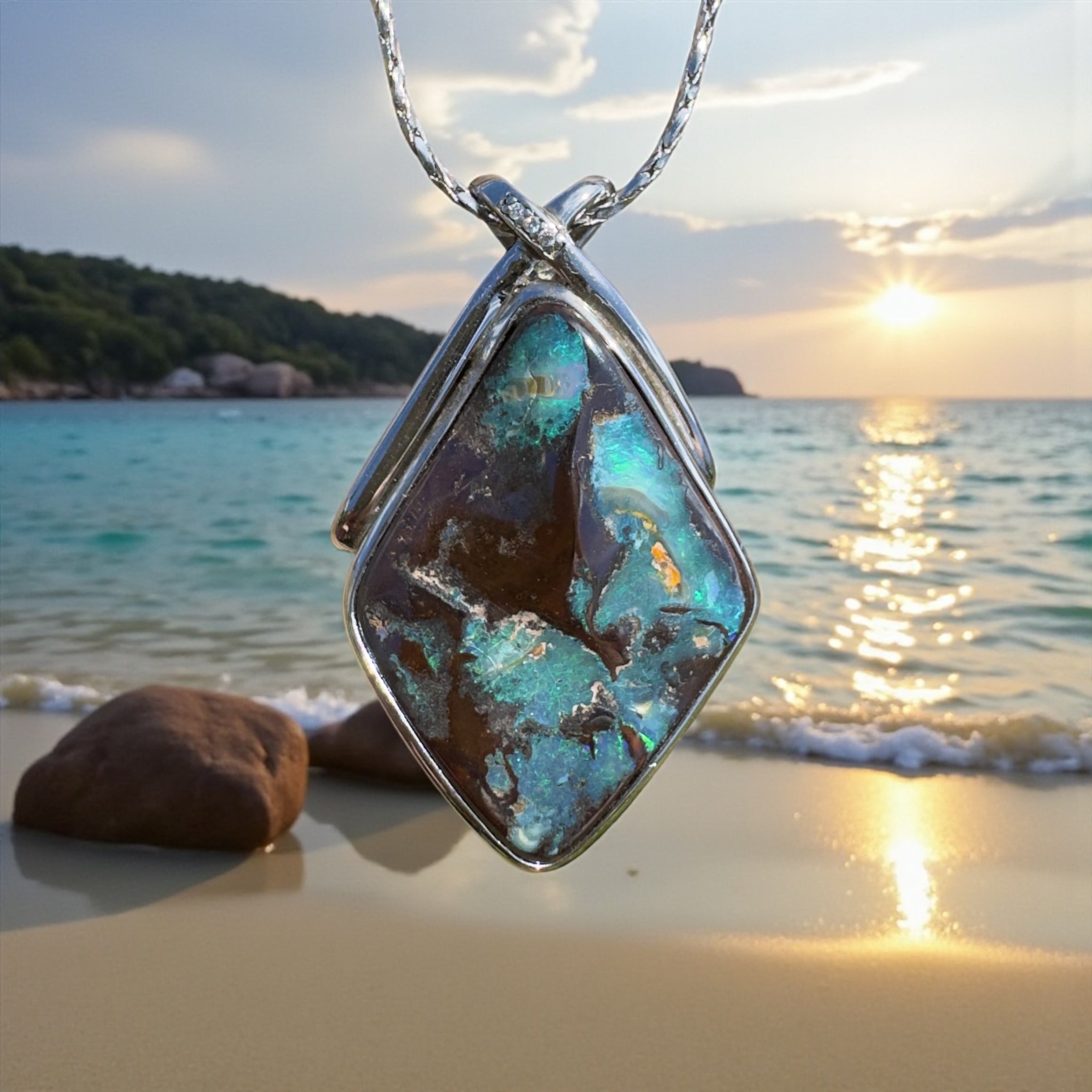
Because every opal forms in its own way, no two stones are ever identical. This natural variation means every piece of opal jewellery is truly one of a kind, making your choice even more special.
Appreciating Nature’s Masterpiece
Wearing an opal means carrying a piece of Australia’s geological history. Each stone is a testament to millions of years of natural artistry, brought to life by expert hands.



Leave a comment
This site is protected by hCaptcha and the hCaptcha Privacy Policy and Terms of Service apply.