
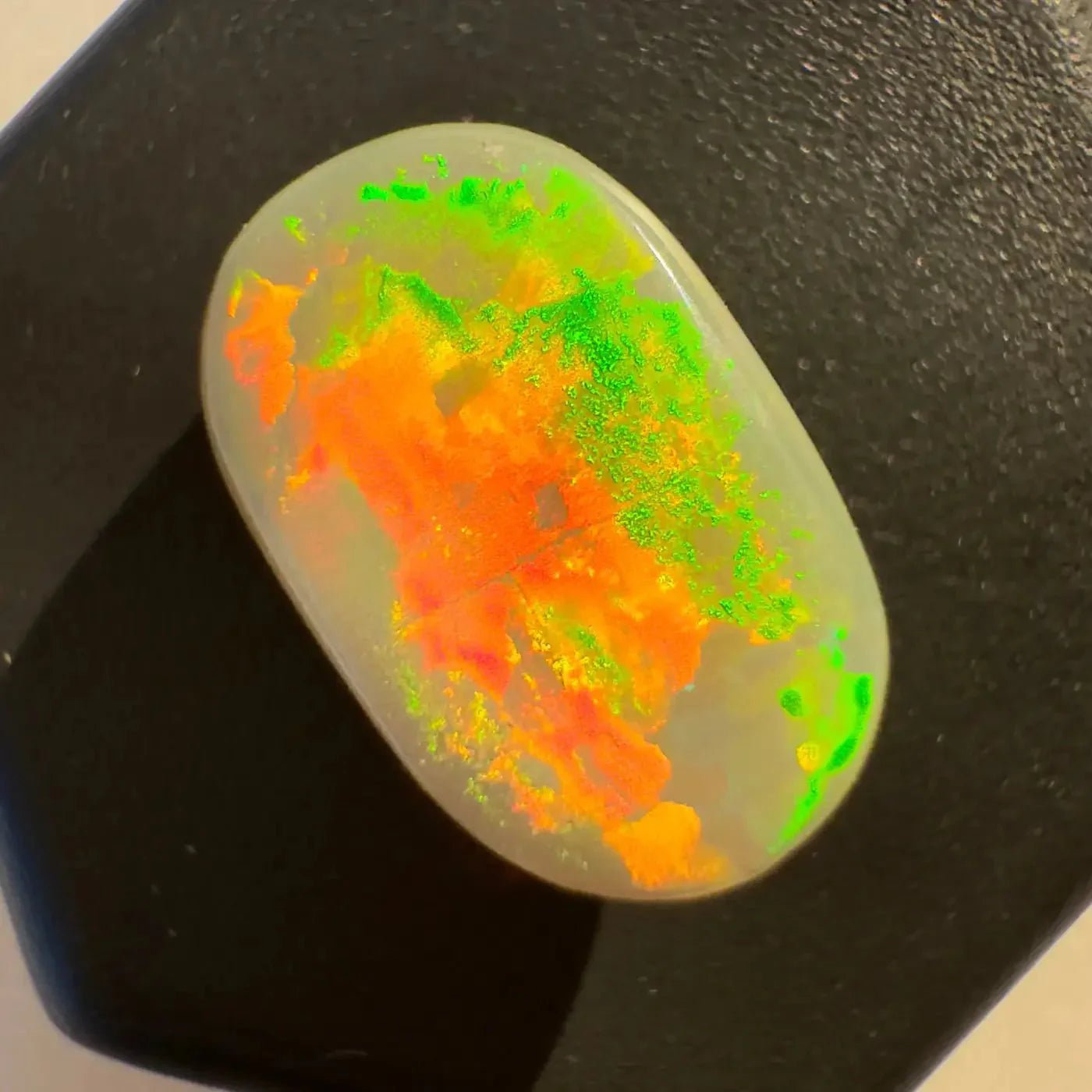
Body Tone: The One Factor That Affects Opal Value More Than Anything Else
Body tone is the single biggest driver of opal value — and most buyers have never heard of it. Here's what it means, how it's graded, and why it matters.
When people ask me how opal is valued, they usually expect me to talk about size or colour. And while both matter, there's a single factor that has more influence on price than either of them: body tone. Understanding it changes the way you look at every opal you'll ever encounter.
What body tone is
Body tone refers to the darkness or lightness of the opal itself — not the colour play, but the background against which that colour appears. It's the base of the stone, and it ranges from pure white through to jet black, with every shade of grey in between.
The Gemmological Association of Australia grades body tone on a scale from N1 to N9. N1 is the darkest — essentially black. N9 is the lightest — essentially white. Everything in between is a shade of grey or translucent crystal.
Why dark body tone is so valuable
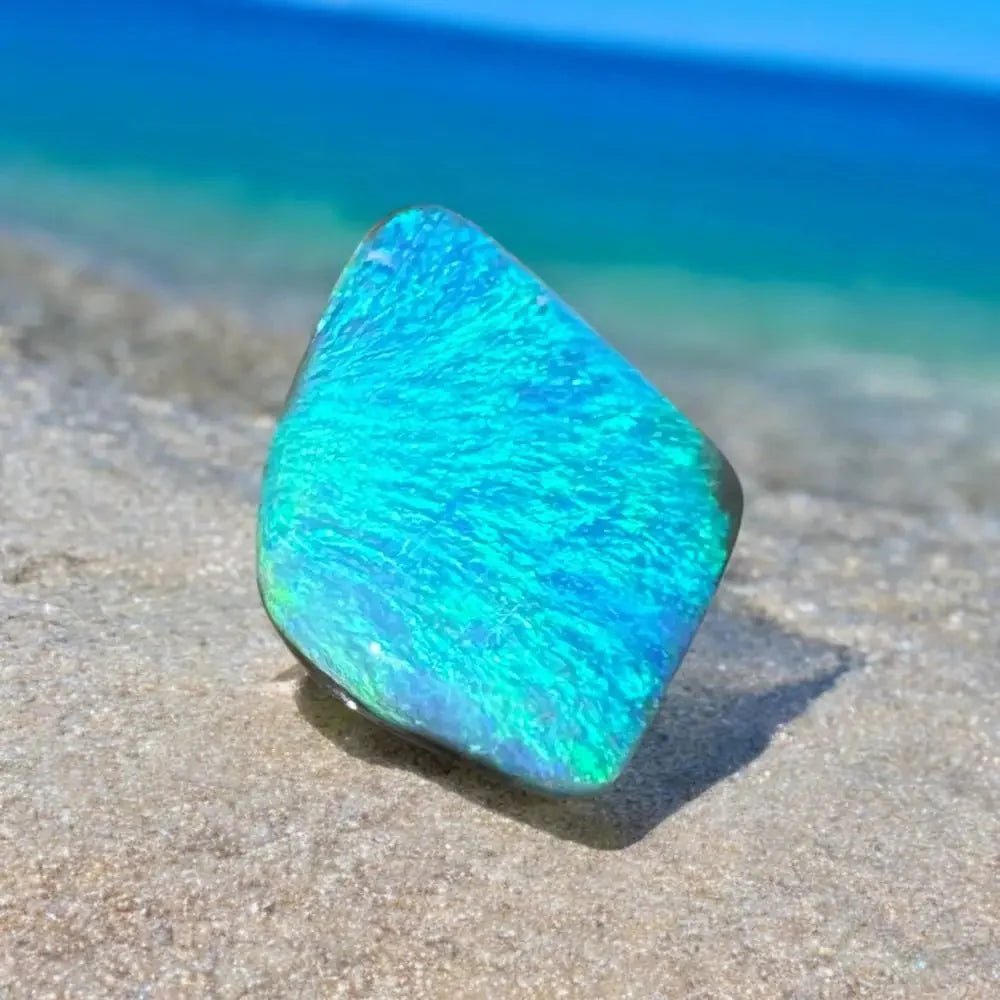
The play of colour in opal is created by light diffracting through tiny silica spheres inside the stone. On a dark background, that colour appears with far greater intensity and contrast. Think of it like a projector screen — a dark screen makes colours look vivid and saturated, while a white screen washes them out. The opal's colour play is the projection, and the body tone is the screen.
This is why black opals from Lightning Ridge command prices that can reach tens of thousands of dollars per carat for the finest examples. The dark base amplifies every flash of colour to its maximum potential.
The body tone categories
In practical terms, opals fall into three groups. Black opals (N1–N4) have very dark body tones and are the most valuable. Dark opals (N5–N6) have a medium-dark body tone and offer excellent colour at more accessible prices. Light and white opals (N7–N9) are the most widely produced — beautiful stones whose softer, pastel colour play is beloved by many.
Crystal opal is a special case — it's transparent or semi-transparent regardless of tone, and the colour appears to float within the stone rather than across its surface. Fine crystal opal with a dark tone is among the most extraordinary material in the gem world.
What to look for when buying
Ask about body tone whenever you're buying. A reputable seller should be able to tell you whether a stone is black, dark, or light, and ideally give you an N-grade. This gives you a framework for comparing stones and understanding why prices differ between pieces that might look similar in a photograph.
At Iona Opal Australia, I'm always happy to discuss the body tone and character of any stone in the collection. It's the kind of detail that makes buying opal genuinely interesting rather than guesswork.


Leave a comment
This site is protected by hCaptcha and the hCaptcha Privacy Policy and Terms of Service apply.