
What is Play of Colour in Opal? The Science and the Magic Explained
What is play of colour?
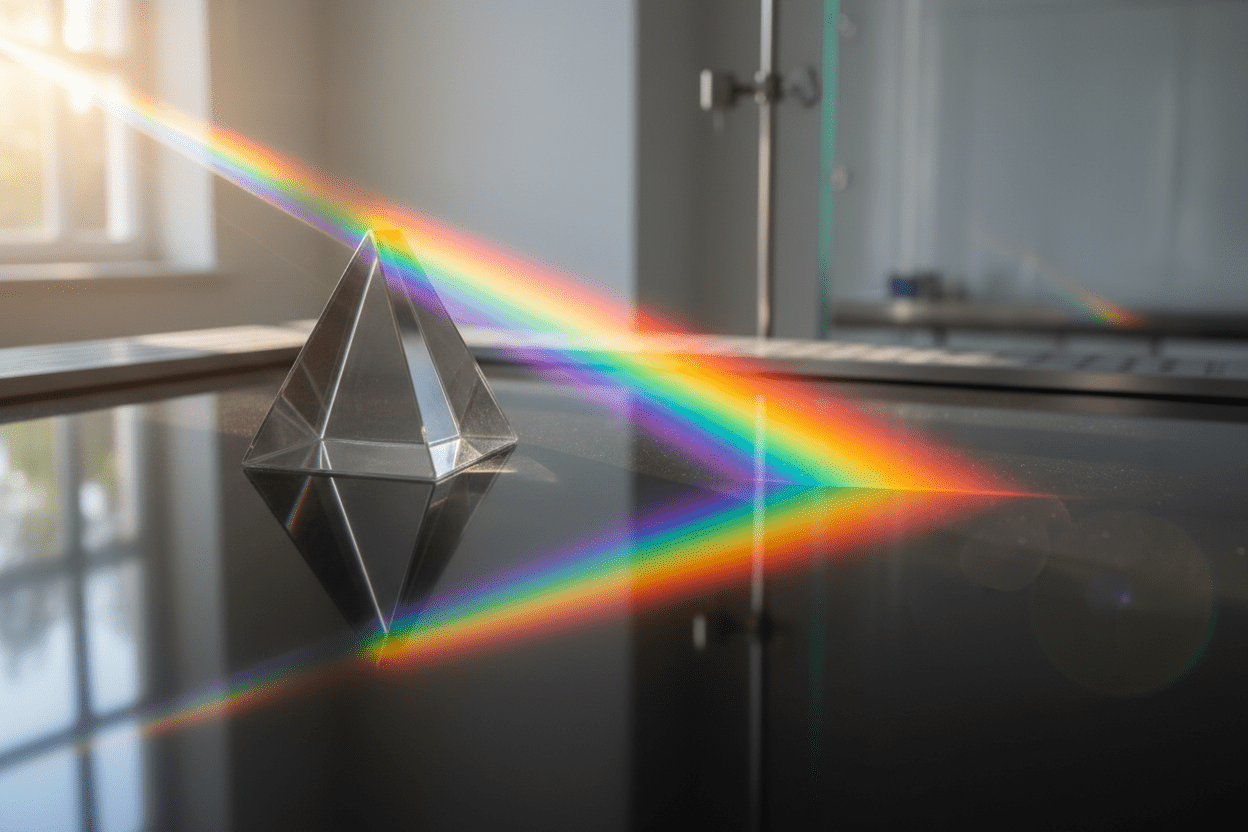
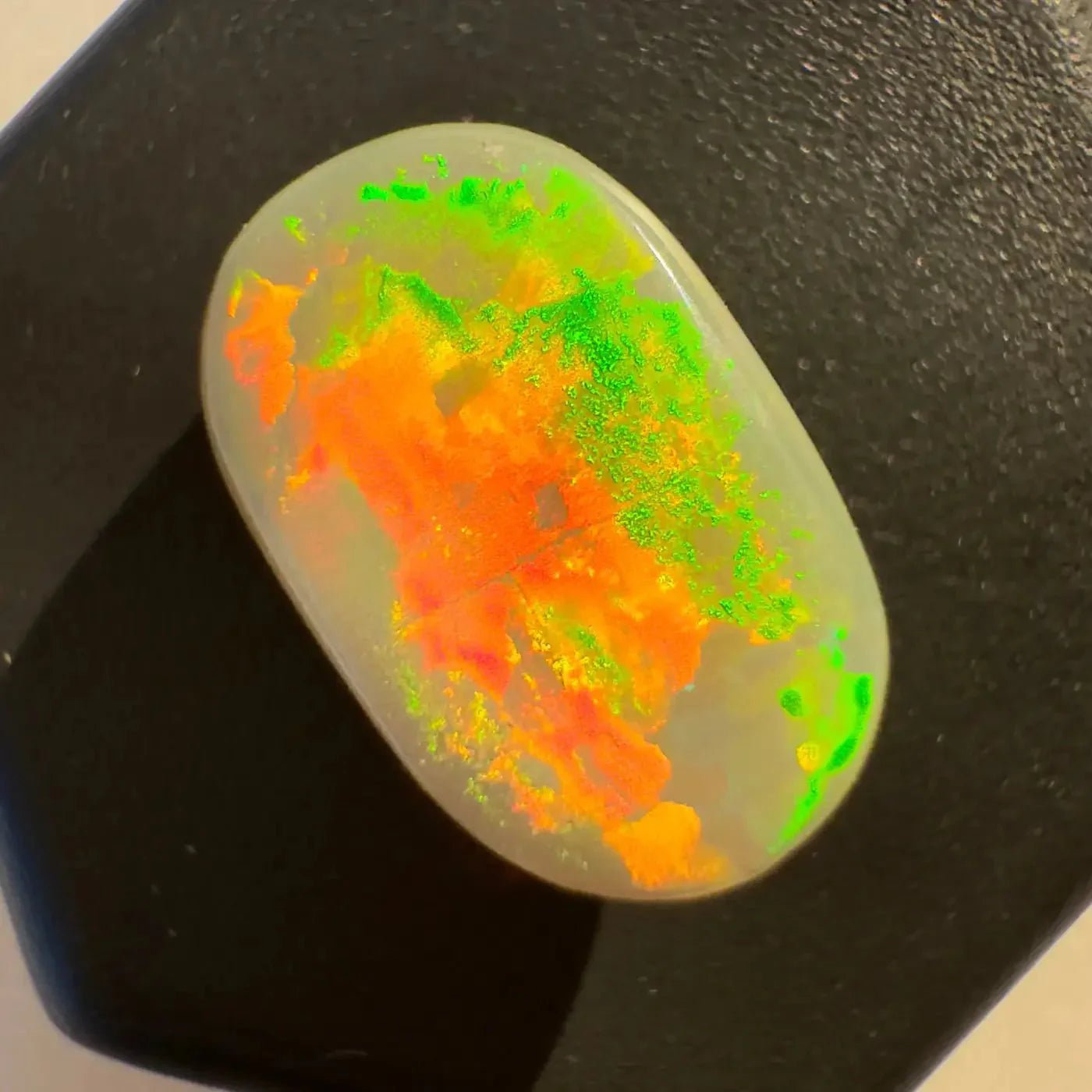
Play of colour is the term used to describe the shifting, spectral colours that appear to move across the surface of a precious opal as the viewing angle or light source changes. It is caused by the diffraction of light through the internal structure of the stone — not by reflection or refraction as in most other gems, but by light being broken into its component colours as it passes through a precisely arranged microscopic grid of silica spheres.
Why does opal show play of colour when other stones don't?
Opal's internal structure is unlike any other gemstone. It consists of millions of tiny silica spheres, stacked in an orderly three-dimensional grid. When light enters the opal, it diffracts — bends and spreads — as it passes through the gaps between these spheres. Different wavelengths of light (different colours) diffract at different angles, so as the viewing angle changes, different colours become visible.
The size of the spheres determines which colours appear. Smaller spheres produce violet and blue. Larger spheres produce red and orange. The most valuable opals — those that show red — contain the largest, most precisely arranged spheres. This is why red play of colour in opal is rarer and more expensive than blue or green.
What does "broad flash" mean?
Broad flash refers to large, sweeping areas of colour that shift as one across the face of the stone. It's one of the most desirable pattern types because the colour is bold, visible from a distance, and dramatic in movement. At Iona Opal Australia, stones with broad flash are among the most popular in the collection — they're the ones that genuinely stop people in their tracks.
What is harlequin pattern?
Harlequin pattern is the rarest and most valuable pattern in opal. It appears as distinct, roughly equal-sized blocks of colour arranged across the face of the stone — like a mosaic or a stained-glass window. True harlequin pattern is exceptionally rare in Lightning Ridge black opal and commands a significant premium. Many stones are described as "harlequin-like" or "semi-harlequin" — genuine harlequin is rarer still.
What should you look for when buying?
The best play of colour is vivid, covers the full face of the stone, includes red or a full spectral range, and moves smoothly and broadly as the stone turns. A stone that only shows colour from one direction — called "directional" colour — is worth less than one that shows colour from every angle. Brightness matters too: a vivid stone will always outperform a dull one of the same pattern type.
At Iona Opal Australia, every stone is described honestly. Understanding what you're looking at makes buying opal a genuine pleasure rather than a gamble.



Leave a comment
This site is protected by hCaptcha and the hCaptcha Privacy Policy and Terms of Service apply.