
Article: Opal and the Great Barrier Reef — Two Kinds of Living Colour
Opal and the Great Barrier Reef — Two Kinds of Living Colour
I work with opal from a base in tropical North Queensland, not far from the coast where the Great Barrier Reef begins. Over the years I've come to see a quiet kinship between the colour that lives inside my stones and the colour that lives just offshore. They're formed in completely different ways, yet both do something no pigment ever could.
Colour that comes from structure, not pigment
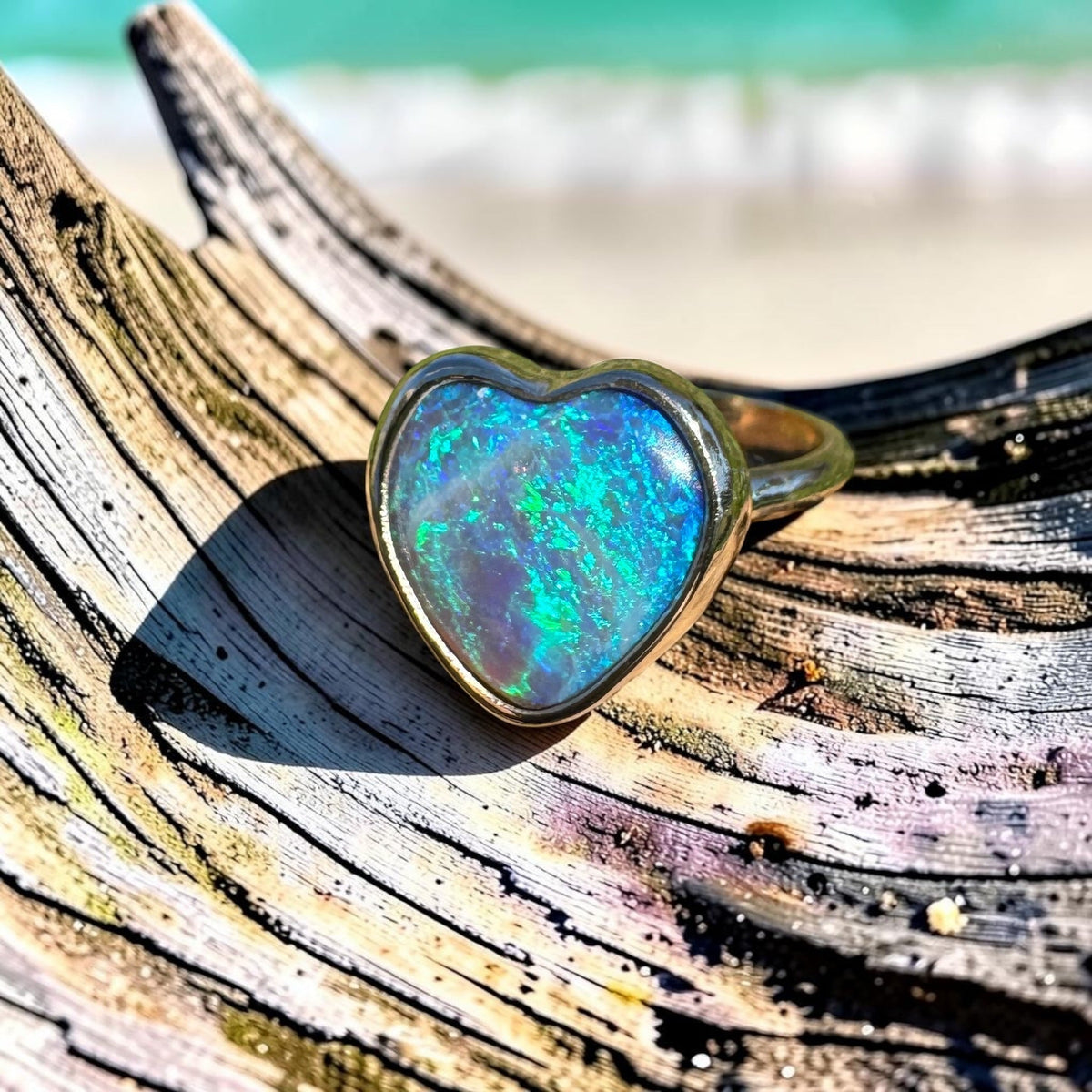
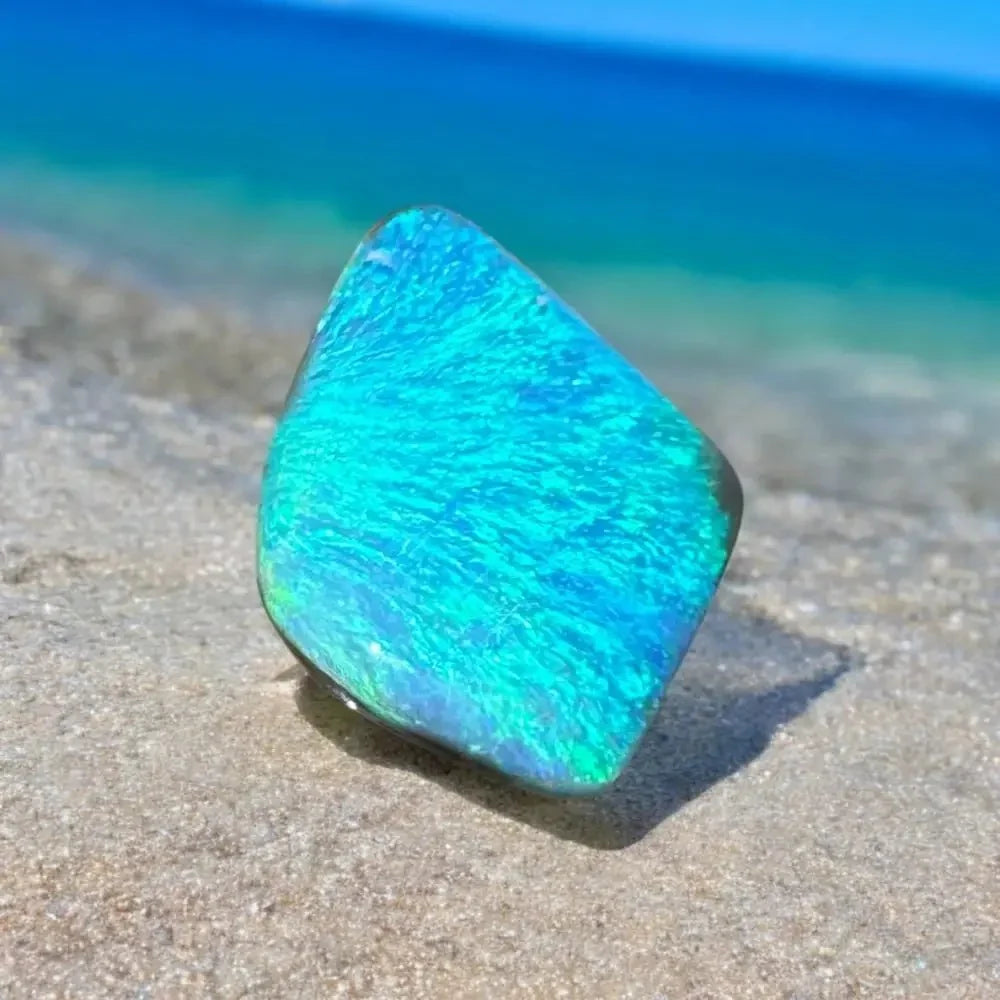
The most surprising thing about opal is that its colour isn't a colour at all in the ordinary sense. There's no dye or mineral tint. The flashes of red, green and blue come from light bending around microscopic spheres of silica inside the stone. Move the opal and the colour moves with it, because you're seeing light itself being rearranged.
The reef works on a related principle more often than people realise. Much of the most vivid colour in coral and reef life comes not from pigment but from the way living structures scatter and reflect light. In both cases, colour is something that happens rather than something that's simply there.
Two Australian wonders shaped by water
Water made both of them. Opal formed as silica-rich water seeped into the ancient rock of the inland over millions of years, settling grain by grain into the stone we cut today. The reef grew as countless small creatures built their structures in warm shallow seas over a similar span of deep time. One is dry inland stone, the other living saltwater, yet both are patient works of water and time.
Living where I do, with the ancient opal fields to the west and the reef to the east, that connection feels close. It's part of why Australian opal means what it does to me.
Why the comparison changes how I cut
Thinking about the reef has made me more attentive to how light moves through a stone. When I'm cutting, I'm not just trying to expose the brightest bar of colour. I'm thinking about how the colour will shift as the wearer moves through their day, the way light shifts across shallow water. A stone that only looks good from one fixed angle is a stone that hasn't been fully understood.
At Iona Opal Australia
Every stone I cut carries a little of this place, worked here in the tropics between the old inland and the sea. I don't set out to imitate the reef in my pieces, but I do try to honour the same idea, that the most beautiful colour is the kind that lives and moves. My handcrafted opals are each a small piece of that living light.


Leave a comment
This site is protected by hCaptcha and the hCaptcha Privacy Policy and Terms of Service apply.