
Article: Yes, Doublets and Triplets Are Real, But You Want Your Opal to Last for Generations, Right?
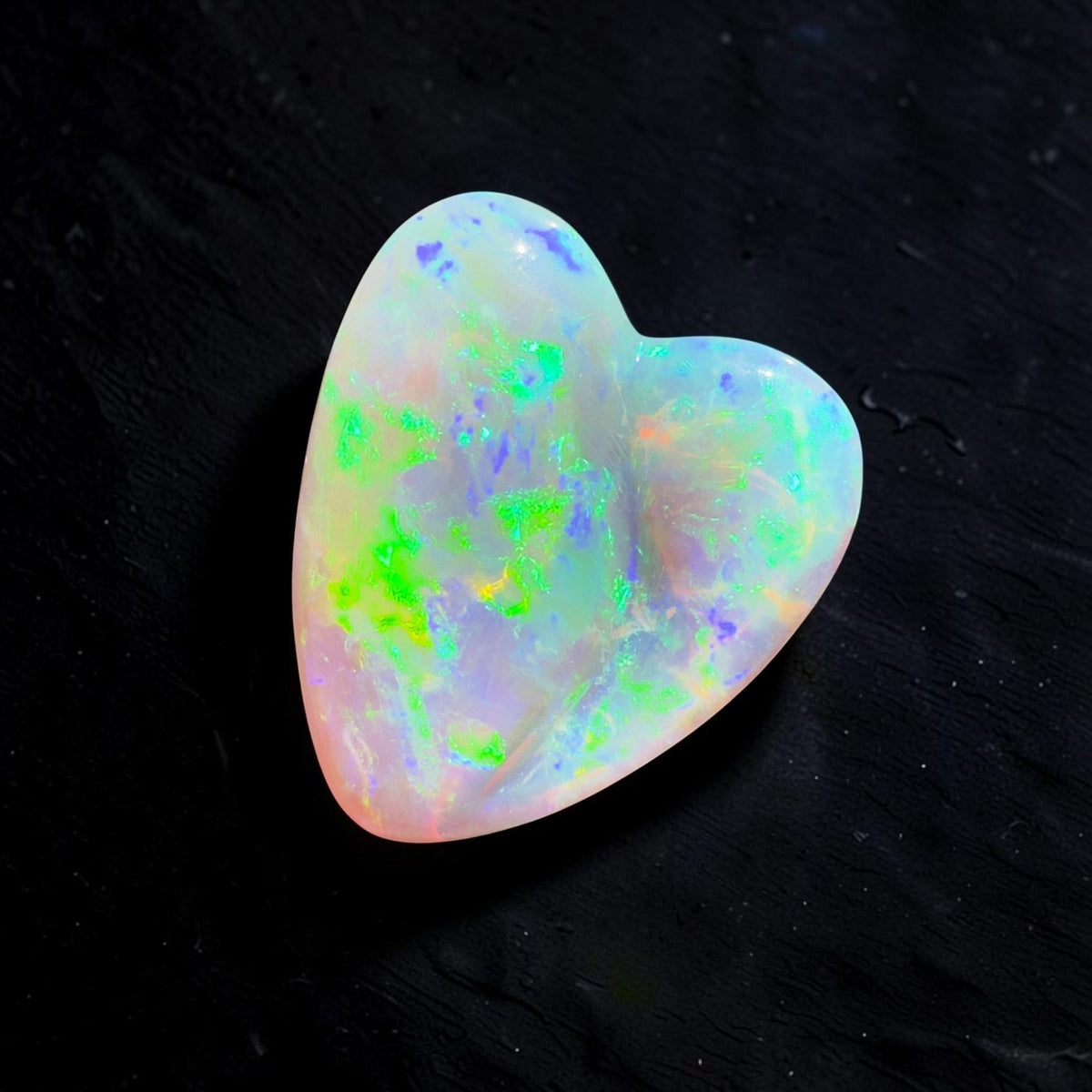
Yes, Doublets and Triplets Are Real, But You Want Your Opal to Last for Generations, Right?
I get asked about doublets and triplets more than almost anything else, usually by someone who has seen a stone online that looks spectacular for the price. So let me say it plainly first: yes, they're real, and yes, there's genuine opal in them. They aren't fakes, and when they're sold honestly there's nothing wrong with buying one. But they're made for a different purpose than the stones that come out of my workshop, and that difference shows most over the long run.
What a doublet actually is
A doublet is a thin slice of precious opal glued onto a dark backing, usually black potch (common opal), ironstone, glass or a hard plastic. The dark layer deepens the colour, so a slice that would look pale and washed out on its own suddenly reads like a far more expensive stone. The opal itself is often only a millimetre or so thick.
What a triplet adds
A triplet takes the idea one step further. The opal slice is thinner again, sometimes close to paper thin, and it's sandwiched between a dark backing and a clear domed cap of quartz, glass or plastic. The cap protects the fragile slice and magnifies the colour, which is why triplets often have that slightly glassy, almost too-even look.
Why they exist, and why that's fine
A lot of beautiful colour forms in seams far too fine to cut as a solid stone. Assembling it means that material gets used rather than thrown back on the mullock heap, and it puts bright opal colour within reach of people who couldn't otherwise afford it. For fashion pieces, a first opal, or something for a teenager who will lose it at a festival, I have no quarrel with them at all.
My only quarrel is with assembled stones sold without being named as such. If a listing just says "Australian opal" at a price that seems too good, ask directly whether it's solid, a doublet or a triplet. An honest seller will tell you straight away.
Where they fall short over a lifetime
- Water and glue don't mix. Over years of wear, moisture can creep into the glue line. The stone turns grey or cloudy, or the layers begin to lift. Doublets and triplets shouldn't be soaked, worn in the shower or put through an ultrasonic cleaner.
- They can't be brought back. A solid opal that's picked up scratches after twenty years can go back on the polishing wheel and come off looking new. With a doublet's thin face there's very little material to work with, and a triplet's opal can't be reached at all.
- Resetting is riskier. The heat and solvents used at a jeweller's bench can weaken the glue, so moving an assembled stone into a new setting carries real risk.
- They're valued as what they are. Valuers and insurers treat assembled stones very differently from solid opal, and they carry little heirloom value.
How to tell what you're looking at
- Look at the side. A doublet or triplet usually shows a straight, even join line where the layers meet. A solid stone shows a natural, slightly irregular transition from colour to potch.
- Look at the back. A perfectly flat, uniformly black base on a loose stone is worth a question.
- Look at the top. A triplet's dome often looks glassy, with colour that seems to sit under a lens rather than in the stone.
One important exception: Queensland boulder opal has a natural ironstone backing because the opal formed inside the ironstone itself. Nothing is glued. So a dark back isn't automatically a sign of a doublet, which is exactly why an honest description matters.
Why I only work with solid opal
Every stone I sell is solid Australian opal, cut by hand in my Townsville workshop from rough I've chosen myself. A solid opal holds its natural water content of roughly three to ten percent, it can be worn every day, polished back up after decades, and reset into a new design by someone who hasn't been born yet. That's really the point of the title. I want the opal you buy from me to still be opal, bright and whole, long after it has left your hands.
At Iona Opal Australia, the honest answer is the only one I'm interested in giving. If you're torn between a large triplet and a smaller solid stone at the same price, I'll almost always point you to the solid one. Not because it's an investment, but because it's the one that will still be worth wearing in fifty years. Buy the stone you love, and buy it knowing exactly what it is.


Leave a comment
This site is protected by hCaptcha and the hCaptcha Privacy Policy and Terms of Service apply.