
Article: Why Opal Can't Be Grown in a Lab the Way Diamonds Can
Why Opal Can't Be Grown in a Lab the Way Diamonds Can
Lab-grown diamonds have become so common that many people now assume every gemstone has a synthetic twin waiting in a factory somewhere. With opal the picture is more complicated, and understanding why tells you a great deal about what makes genuine Australian opal so special.
How natural opal forms
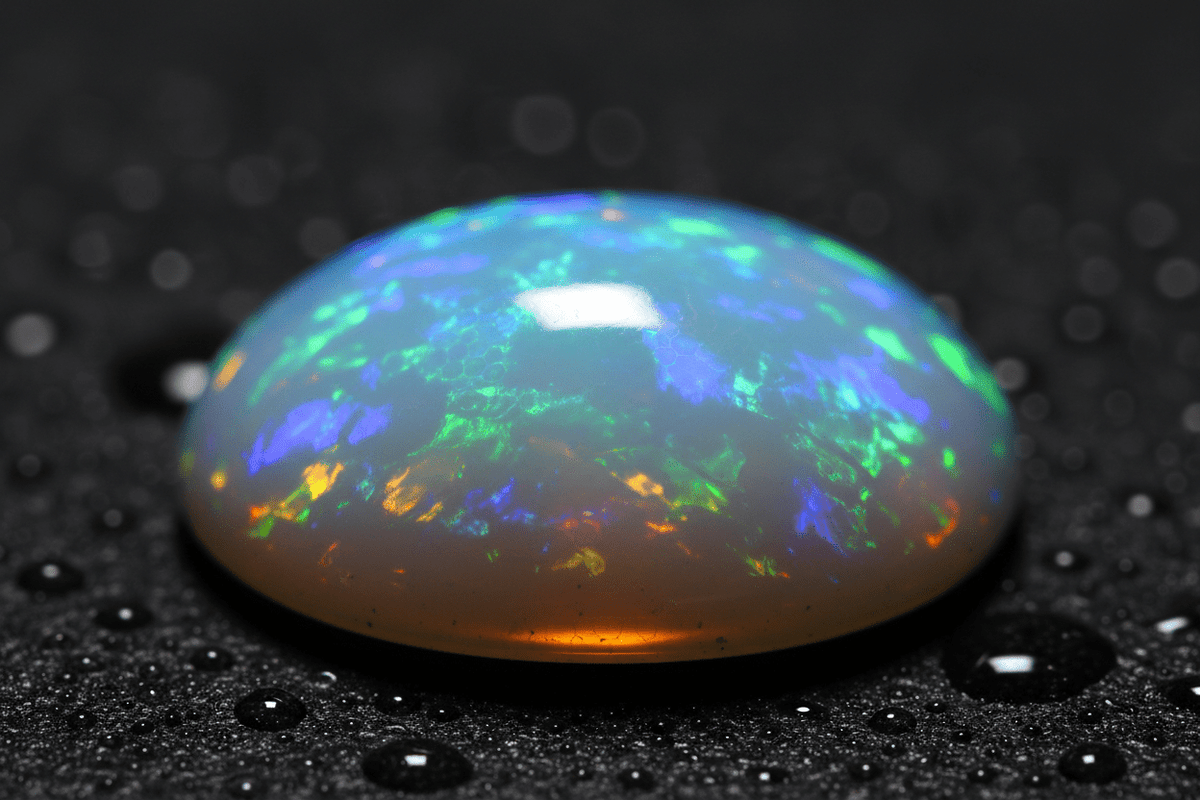
Opal is made of tiny spheres of silica, stacked in an orderly way and set with water through the structure. Its colour doesn't come from pigment at all. It comes from light bending around those microscopic spheres, which is why the colour shifts as you move the stone. This is called play of colour, and it depends on the spheres being remarkably uniform and precisely arranged.
In nature this happens slowly, over millions of years, as silica-rich water seeps into cracks and cavities in the rock and settles grain by grain. The conditions have to be just right, which is part of why gem-quality opal is so rare and why Australia, with its ancient stable landscape, produces the vast majority of the world's supply.
Why the lab struggles to copy it
Diamonds are a single element, carbon, arranged in a simple crystal structure. That's demanding to reproduce but achievable, and lab-grown diamonds are chemically identical to natural ones. Opal is different. Recreating that precise stacking of silica spheres, with the water content and internal structure that give real play of colour, is extraordinarily difficult.
Synthetic opal-like materials do exist, but under close inspection they tend to give themselves away. The patterns often look too regular, sometimes with a tell-tale columnar or snakeskin appearance under magnification, and the feel and internal structure differ from the real thing. They're imitations of the effect rather than true equivalents of the stone.
Imitation versus solid natural opal
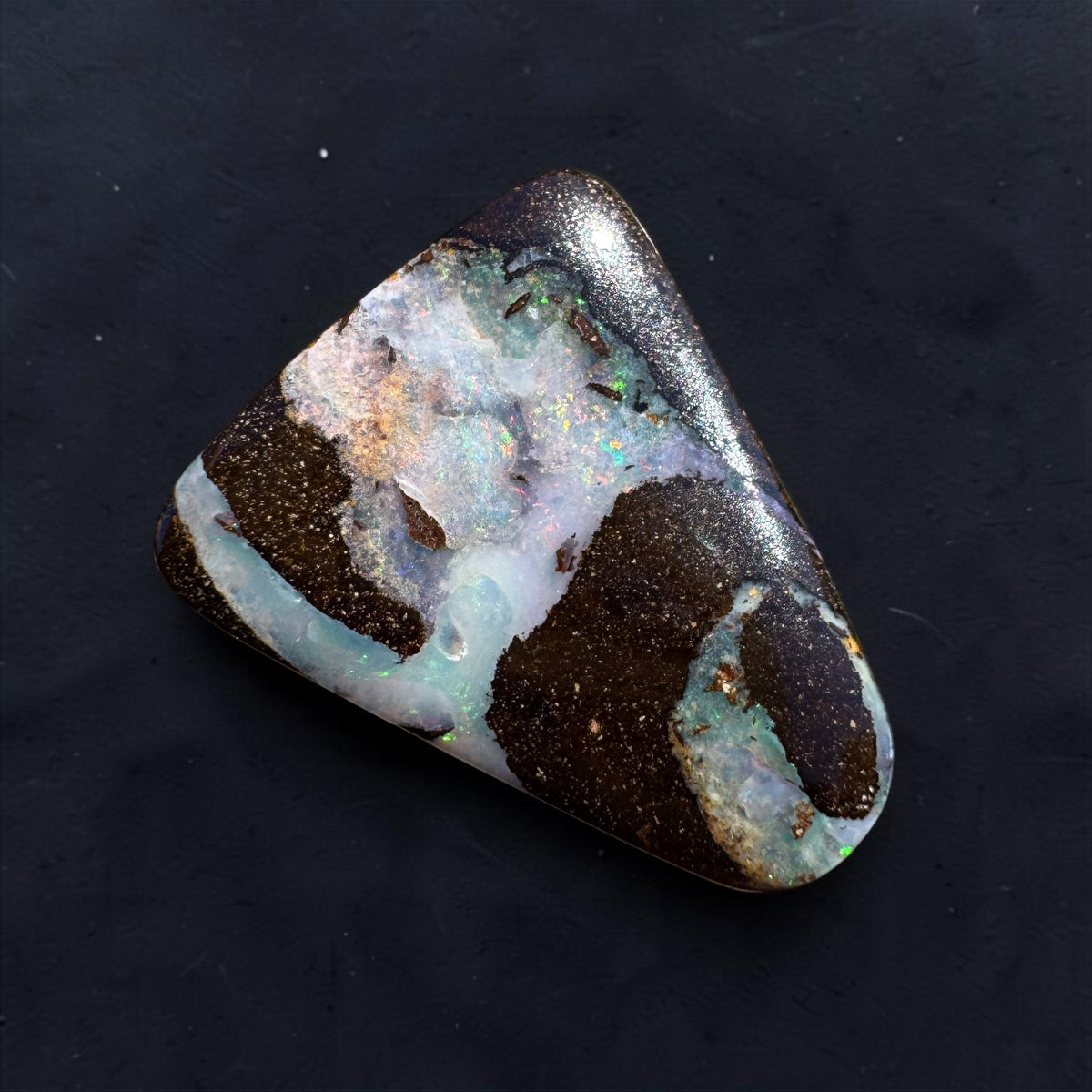
It's worth being clear about what's out there. Alongside genuine solid opal you'll find doublets and triplets, which use a thin slice of real opal backed and sometimes capped with other materials, as well as fully man-made imitations. None of these is the same as a solid natural stone, and a trustworthy seller will always tell you which is which.
I only ever work with solid natural Australian opal. Not because the alternatives can't look pretty, but because a solid stone is the real thing all the way through, formed by nature and nothing else.
At Iona Opal Australia
When you hold one of my opals, you're holding something the earth spent millions of years making, that no laboratory has managed to convincingly reproduce. I cut each one by hand from genuine Australian rough, and I'm always happy to explain exactly why a solid natural stone is worth choosing over any imitation.

Leave a comment
This site is protected by hCaptcha and the hCaptcha Privacy Policy and Terms of Service apply.